



Why Wilbert’s Pulls the NHTSA Emergency Response Guide Before Handling Any EV Battery Pack
Why Wilbert’s Pulls the NHTSA Emergency Response Guide Before Handling Any EV Battery Pack
An Emergency Response Guide is the first document Wilbert’s pulls before any technician touches a high-voltage battery pack from an electric or hybrid vehicle. Removing and processing those packs is now a regular part of the yard’s work alongside sheet metal and drivetrains, and that work only starts once the right paperwork for that exact make and model is in hand.
What an Emergency Response Guide Actually Covers
Vehicle manufacturers publish two safety documents for their battery-electric, hybrid-electric, plug-in hybrid, and fuel cell models, and NHTSA hosts them in one searchable library: a full Emergency Response Guide and a shorter rescue sheet. The rescue sheet is the quick-glance version, with cutaway diagrams, high-voltage component locations, and disconnect points. The full guide goes deeper, covering fire behavior, submersion procedures, fluid handling, and the manufacturer’s high-voltage shutdown sequence for that model.
What's on a Rescue Sheet
The rescue sheet fits on one or two pages so a crew can read it fast. A typical sheet shows:
- Battery pack and high-voltage cable locations
- Service disconnect and 12-volt battery disconnect points
- Airbag, inflator, and seatbelt pretensioner locations
- Marked no-cut zones that should never be cut or pierced
Why Wilbert's Won't Touch a Pack Without One
A damaged or improperly discharged high-voltage battery can go into thermal runaway hours, days, or even weeks after it’s removed from the vehicle. EV fires are rare. A widely cited AutoinsuranceEZ analysis of NTSB and Bureau of Transportation Statistics data put them at roughly 25 fires per 100,000 vehicles sold, far below gas and hybrid vehicles. But a pack that’s handled before it’s properly depowered doesn’t care how rare the failure mode is.
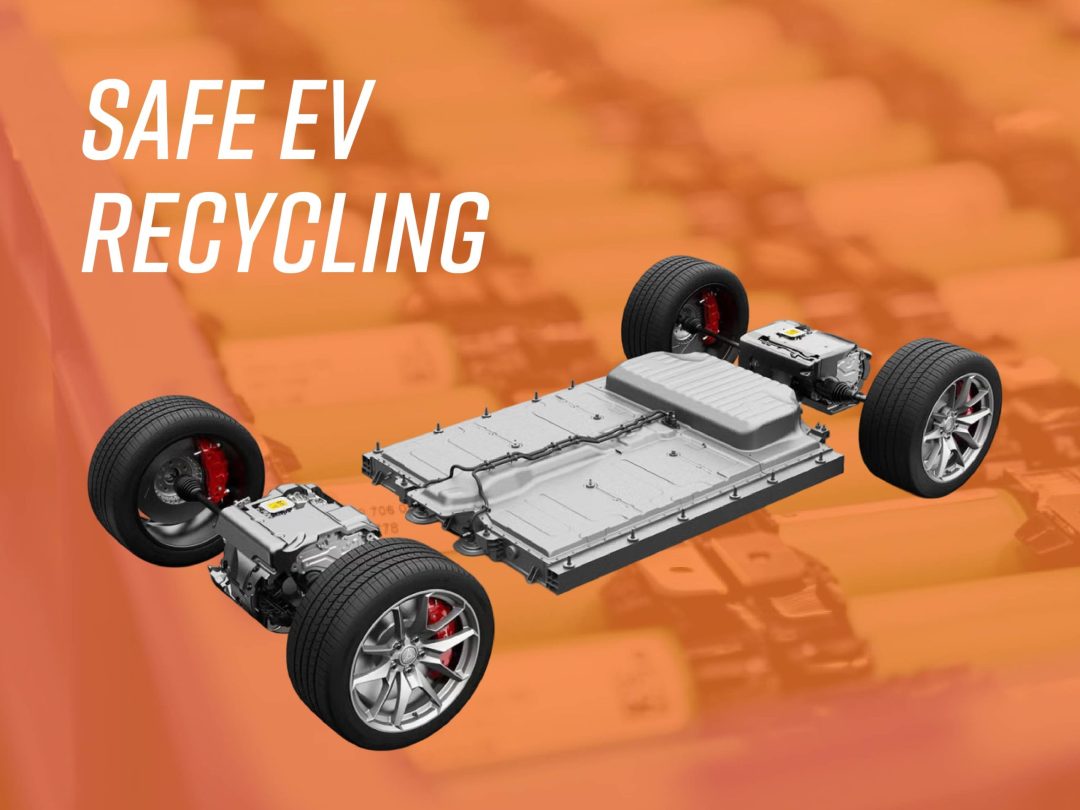
The Emergency Response Guide shows Wilbert’s crew where the high-voltage lines run, where the service disconnect sits, and which zones are off-limits before any tool comes near the battery housing.
How the 3-Step Process Works on the Floor
Every EV, HEV, PHEV, or FCEV that arrives goes through the same three checks before its battery pack moves anywhere:
- Pull the right guide. Technicians pull the rescue sheet and Emergency Response Guide for that specific make, model, and year. A close match isn’t good enough, because disconnect locations change between model years.
- Confirm the disconnect and depower sequence. The crew locates the service disconnect and follows the manufacturer’s high-voltage shutdown sequence before the pack is removed.
- Stage and monitor the pack. Removed packs are isolated and monitored before further processing. For yard layout, spacing, and storage, Wilbert’s draws on the National Fire Protection Association’s EV Safety Training program, guidance that sits outside the scope of any single manufacturer’s guide.
Emergency Response Guide FAQ
Where can I find the Emergency Response Guide for a specific vehicle?
NHTSA’s Emergency Response Guide library lets you search by manufacturer, model, and year. Most manufacturers also post their guides on their own first-responder sites.
Is an Emergency Response Guide the same as an owner’s manual?
No. The guide is written for firefighters, tow operators, and other responders. It focuses on high-voltage hazards, safe shutdown, and fire behavior rather than everyday operation.
Is a damaged EV battery still dangerous after a crash?
It can be. A damaged pack can reignite long after the initial incident, which is why Wilbert’s depowers, isolates, and monitors every pack before processing it.
The Bottom Line
Handling an EV battery pack safely isn’t guesswork, and Wilbert’s doesn’t treat it that way. Every pack gets its Emergency Response Guide pulled and read before a single tool touches it. That’s the difference between a documented, model-specific process and a bet.
Looking for parts? Search our vehicle inventory or learn how to pull your own part. Have a vehicle to sell? Get cash for your car.