




Automotive Recycling Through Social Media: How Wilbert’s U-Pull It Tells the Story
Automotive Recycling
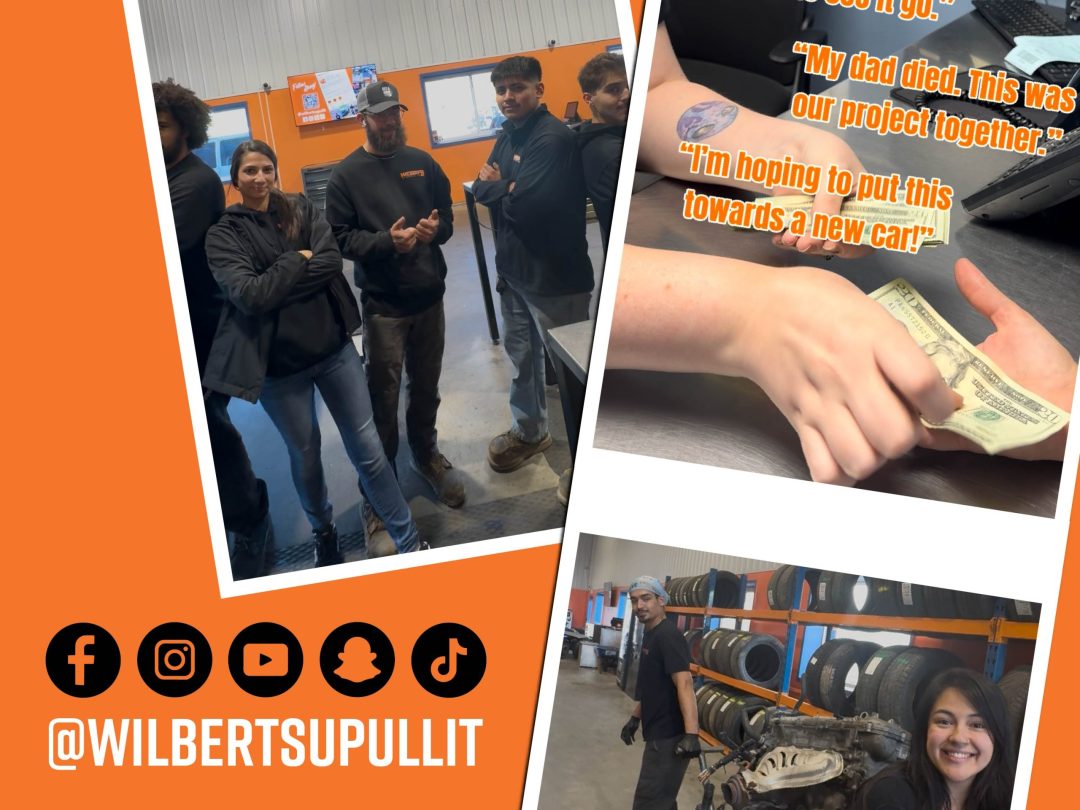
Automotive recycling is more than processing vehicles and putting used parts back into circulation. It is an industry filled with people, knowledge, unexpected discoveries, mechanical stories, and experiences that are worth sharing. At Wilbert’s U-Pull It, social media has become one of the most important ways to tell those stories and give customers an inside look at the world of automotive recycling.  Across Facebook ( https://www.facebook.com/wilbertsupullit), Instagram ( https://www.instagram.com/wilbertsupullit), TikTok ( https://www.tiktok.com/@wilbertsupullit/), YouTube ( https://www.youtube.com/@wilbertsupullit) and Snapchat ( https://www.snapchat.com/@wilbertsupullit), @wilbertsupullit brings the automotive recycling experience to life through short-form videos, reels, photos, educational content, customer interactions, and behind-the-scenes stories. But the goal is about more than promoting inventory. Wilbert’s focuses on using real people and real employees to show customers what happens inside a modern self-service salvage yard.  The result is social media content that combines entertainment, education, automotive knowledge, and the personalities of the people who make the business work every day. 

Automotive Recycling Through Real Stories

Every vehicle that arrives at a U-Pull It yard has a story.  Some vehicles are popular models that customers know immediately. Others are unusual, hard-to-find, or packed with desirable parts. Some become sources of interesting automotive trivia, while others provide a customer with the exact component they need to complete a repair.  Those everyday experiences create opportunities for storytelling.  Rather than relying exclusively on traditional advertising, Wilbert’s uses social media to turn these moments into content. An employee might explain why a particular vehicle was popular, demonstrate an interesting part, walk viewers through the yard, highlight a hard-to-find component, or share something they have learned from years of working in auto recycling.  This approach makes the content feel more personal.  Customers are not simply seeing a company talking about itself. They are seeing the people who work there, learning from their experience, and getting a better understanding of what happens inside the automotive recycling industry ().

Real Employees Make the Content Authentic

People are at the center of Wilbert’s social media strategy ( https://www.wilberts.com/u-pull-it/news/wilberts-u-pull-it-team-to-share-social-media-success-at-ara-national-conference/).  The employees who work in automotive recycling have an incredible amount of hands-on knowledge. They know vehicles, parts, tools, repair techniques, and the unique challenges that come with working in a self-service salvage yard.  That knowledge can be difficult to communicate through a traditional advertisement.  A reel, however, can put an employee directly in front of the camera and let them explain it.  That might mean explaining why a certain vehicle is desirable, discussing popular parts, or simply sharing an entertaining moment from the yard.  The personality matters, too.  Not every video needs to feel polished or scripted. In fact, some of the most engaging content comes from allowing employees to be themselves. Humor, personality, automotive passion, and genuine reactions make the content more relatable.  That human element helps distinguish Wilbert’s social media from traditional corporate advertising. 

Reels Give Customers a Look Inside Auto Recycling

Short-form video has changed how people consume information online, and reels have become an especially useful storytelling tool for auto recycling. 

A self-service salvage yard is an extremely visual environment. Rows of vehicles, employees working in the yard, customers searching for parts, and new inventory all create content that is naturally suited to video. 

A single reel can quickly answer questions that a customer might have. 

What does a U-Pull It yard actually look like? 

What kinds of vehicles are available? 

What parts should customers look for? 

Why is a particular vehicle desirable? 

How does automotive recycling work? 

What makes a certain part worth pulling? 

Instead of simply telling people the answer, Wilbert’s can show them. 

That is one of the most important advantages of social media storytelling. Video allows customers to experience the yard before they ever walk through the gate.

Showing the World of Automotive Recycling

One of Wilbert’s goals through social media is to give people a better understanding of what automotive recycling actually looks like.  The term “junkyard” can sometimes create an outdated image. Modern automotive recycling is much more than a collection of old vehicles.  A self-service salvage yard connects vehicles, parts, customers, employees, and the recycling process. Usable components can be removed from vehicles and given a second life, helping customers find affordable alternatives to purchasing new parts.  That creates an opportunity for Wilbert’s social media content to educate viewers ( https://youtu.be/cj3-lw3lKZU?si=tr7pE2hHV-PVkZaT) about recycled auto parts and the role they play in keeping vehicles on the road.  A video about a vehicle entering the yard can explain what parts customers may want to look for. A walk through the inventory can demonstrate the variety of vehicles available. An employee can explain the difference between similar components or point out a part that customers might otherwise overlook.  These stories make the automotive recycling industry easier to understand.

Facebook, Instagram, TikTok, and Snapchat

Wilbert’s U-Pull It maintains a presence across multiple social media platforms ( https://truedigitalcom.com/resources/blog/the-role-of-social-media-in-automotive-marketing/) because different platforms allow the company to connect with customers in different ways.  Facebook provides an opportunity to share vehicle arrivals, promotions, events, educational content, customer information, photos, and longer-form updates.  Instagram is a natural fit for automotive content, particularly reels, vehicle features, employee videos, parts highlights, and visual storytelling. The @wilbertsupullit account gives followers a regular look at what is happening throughout the yards.  TikTok allows Wilbert’s to take a more fast-paced and entertaining approach to automotive recycling. Quick tips, employee personalities, and humorous moments can all become short-form content.  Snapchat provides another informal way to share moments from the yard and connect with customers through more immediate, behind-the-scenes content.  Although each platform has its own style, the central idea remains the same: tell the story of automotive recycling through authentic content.

Educating Customers Through Social Media

Not everyone who follows Wilbert’s is an automotive expert. 

Some followers are experienced mechanics. Others are DIY enthusiasts working on their first project. Some are looking for an inexpensive replacement part, while others simply enjoy cars and want to see what arrives at the yard. 

That variety gives Wilbert’s an opportunity to make its content accessible to everyone. 

Educational videos can explain automotive terminology, identify parts, discuss popular vehicles, highlight desirable components, and provide helpful information about visiting a self-service salvage yard. 

The best educational content does not feel like a lesson. It feels like someone who knows cars sharing something interesting with a friend. 

That is the approach Wilbert’s strives for with its social media storytelling.

Making the Automotive Recycling Community Part of the Story

Social media is also about creating a community. 

Wilbert’s uses its platforms to interact with customers through questions, contests, giveaways, trivia, events, comments, and user-generated content. Customers can share their projects, ask questions, suggest future content, and interact directly with the people behind the business. 

This creates a two-way conversation. 

Instead of simply broadcasting advertisements, Wilbert’s can listen to what customers want to see and use that feedback to develop future content. 

A customer asking about a particular vehicle can inspire a reel. A popular part can become the subject of an educational video. An unusual vehicle can turn into a vehicle spotlight. A frequently asked question can become a quick explainer. 

The customers become part of the storytelling process.

Why Storytelling Matters to Wilbert’s U-Pull It

At its core, Wilbert’s social media presence is about showing people what makes automotive recycling interesting. 

It is about the employees who know the yards inside and out. 

It is about the customers searching for the part that will get their vehicle back on the road. 

It is about the vehicles that arrive with thousands of miles and years of history behind them. 

It is about the parts that receive a second life. 

And it is about the unexpected moments that happen every day in a busy U-Pull It yard. 

That is why real employees are such an important part of the content. They provide the experience, personality, humor, and knowledge that cannot be replicated by a traditional advertisement.

Follow @wilbertsupullit for More Automotive Recycling Stories

The story of automotive recycling is constantly changing. New vehicles arrive. New parts become available. Customers take on new projects. Employees discover something interesting. And every day brings another opportunity to show people something they may not have seen before. 

Wilbert’s U-Pull It uses Facebook, Instagram, TikTok, and Snapchat to bring those stories to its audience. 

From educational automotive tips to entertaining reels, vehicle spotlights, employee features, customer events, and behind-the-scenes looks at the yard, @wilbertsupullit gives followers a front-row seat to the world of automotive recycling. 

For automotive enthusiasts, DIYers, professional mechanics, bargain hunters, and anyone curious about what happens to vehicles at the end of their original road life, there is always another story waiting in the yard. 

Follow @wilbertsupullit and see what is happening in the world of automotive recycling.